What GM’s CarPlay Shutdown Really Means — And Why Older Car Owners Are the Ones Who Come Out Ahead
If you’ve followed automotive tech news recently, you’ve likely seen the headline: General Motors has confirmed it will phase out Apple CarPlay and Android Auto across its entire lineup — not just EVs, but gas-powered vehicles too. This isn’t a minor product tweak. It’s a strategic shift touching GM’s entire infotainment infrastructure, and it reveals something every current car owner — especially owners of older vehicles — should think carefully about.
What GM Actually Announced
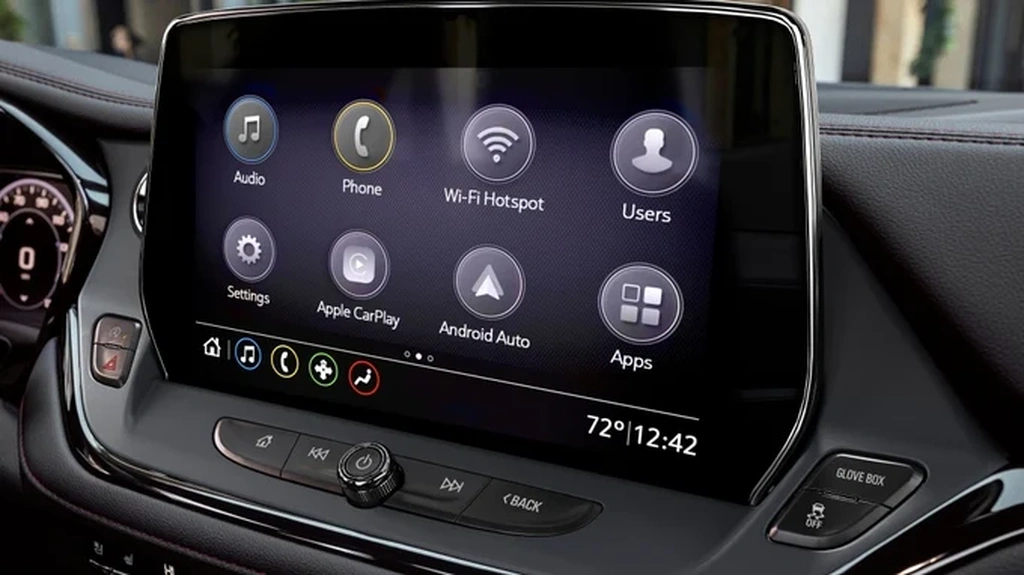
The timeline stretches back further than most people realize. In 2023, GM confirmed it would remove CarPlay and Android Auto support from its electric vehicles, starting with the Chevrolet Blazer EV and Cadillac Lyriq. At the time, many shoppers and journalists were confused, but GM maintained this was an EV-specific decision — gas-powered models would keep the feature.
In October 2025, GM made the scope unmistakable: CEO Mary Barra confirmed on The Verge’s Decoder podcast that the company would remove CarPlay and Android Auto from its entire vehicle lineup, including gas-powered cars, as it transitions to a new in-house “Centralized Computing Platform.” The first vehicle built on this platform is the 2028 Cadillac Escalade IQ. In place of CarPlay, GM is rolling out its own system called Ultifi, built on Android Automotive OS — developed in partnership with Google. It’s worth noting this is a different thing entirely from Android Auto: Android Auto simply mirrors your phone’s interface onto the car’s screen, while Android Automotive is an operating system that runs natively on the vehicle’s own hardware. In effect, GM isn’t removing Google from the equation — it’s replacing “your phone talking to Google” with “the car itself being deeply tied to Google.”
GM’s official reasoning centers on reducing driver distraction, with Barra explaining that customers found switching between a phone-projection interface and the car’s native interface disruptive. But one detail complicates that story: reporting has noted that GM previously shut down a third-party aftermarket solution that let owners of its EVs regain CarPlay and Android Auto functionality — a move that’s difficult to square with a stated goal of simply reducing distraction.
The Motive Behind the Official Reason
Taken at face value, GM’s explanation reads like a straightforward user-experience decision. But a few additional facts round out the picture considerably.
First, there’s data. Every time a driver uses CarPlay or Android Auto for navigation or music, the resulting usage data flows to Apple and Google — not to the automaker. GM, notably, has already faced real consequences tied to data practices of its own: in January 2025, the US Federal Trade Commission took enforcement action against GM for collecting and selling driver behavior data — including precise location, hard-braking events, speeding, and late-night driving patterns — to companies like Experian, Equifax, and TransUnion, in some cases as frequently as every three seconds, without adequate driver consent.
Second, there’s the business model. Industry analysts broadly view the removal of CarPlay as a foundational step toward building GM’s own software ecosystem, with future subscription-based features as part of the plan. As one analysis put it plainly: if a driver’s phone can already handle everything for free, there’s nothing left for the automaker to charge for. This isn’t purely a technical decision — it’s a business model redesign, and the everyday habits and choices of ordinary drivers appear to be part of what’s being redesigned around.
Worth noting: by 2026, GM’s messaging has already started to soften in places. Cadillac, for instance, shifted from a firm removal stance to language about “continuing to evolve its infotainment strategy across the EV portfolio, based on customer feedback” — a sign that this was never a purely technical call to begin with, but one shaped by real commercial calculation and real customer pushback.
What This Means If You Own an Older Car
At this point you might reasonably ask: this is GM’s situation — what does it have to do with my Toyota Crown or Lexus GS?
The connection is this: the GM story exposes a risk every new-car buyer faces but rarely thinks about — whether your car gets to keep CarPlay isn’t ultimately your decision. It’s the automaker’s.
That’s the part of this story every car owner should sit with:
- A feature your car has today can be taken away tomorrow by a strategic pivot you have no say in. Even though GM has stated existing vehicles won’t be affected, that promise only holds because the automaker retains complete authority to make the opposite decision for future vehicles — a decision current owners have zero vote in.
- Software-defined features are effectively rented, not owned. The car you paid for outright still has CarPlay functionality resting on an ever-shifting business relationship between the automaker, Apple, and Google. If that relationship changes, the feature can simply disappear.
- Automakers have real incentives to restrict third-party connectivity — and those incentives don’t line up with yours. Data monetization, subscription revenue, and ecosystem lock-in are all legitimate business reasons for a manufacturer to tighten control over phone integration. None of them are reasons that benefit the driver.
The Flip Side: Older Car Owners Already Hold the Advantage
This is the most counterintuitive — and most useful — part of the story: owners of older, retrofitted vehicles are already in a more secure position than many new-car buyers.
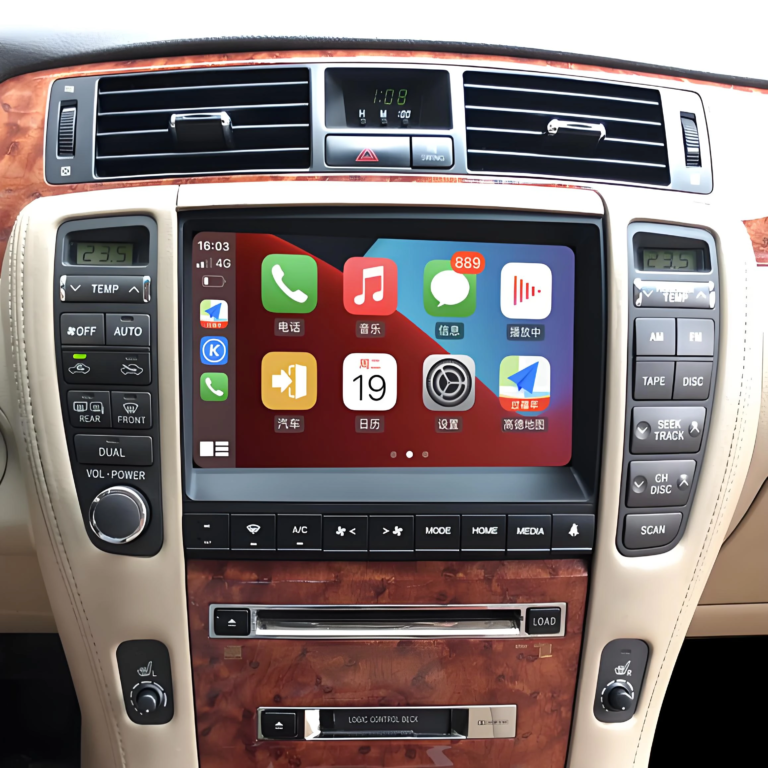
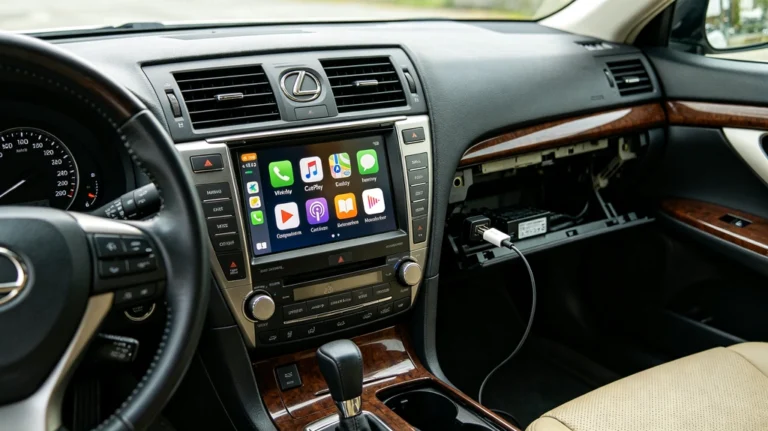
The reason is simple. CarPlay functionality in a Toyota Crown, Mark II, Lexus GS, or Lexus LX doesn’t come from a software license granted by an automaker — it comes from independent hardware you chose to install yourself. That distinction matters enormously:
- No one can take it away with an OTA update or a corporate strategy shift. A hidden integration module is hardware you purchased and own outright. Its continued function depends entirely on you — not on any automaker’s board decision.
- Your setup is immune to shifts in an automaker’s business model. However GM, Cadillac, or any other brand reshapes its infotainment strategy going forward, none of it touches your car — your CarPlay experience sits entirely outside that industry battle.
- You own the capability itself, not a permission to use it. That’s the core distinction: a new-car buyer is using access an automaker grants — and can revoke. An older car owner who’s retrofitted CarPlay owns a physical capability installed in their own vehicle.
In other words, while new-car shoppers are left wondering whether their vehicle might get its CarPlay support quietly stripped away down the line, owners of retrofitted older vehicles have already removed that uncertainty entirely, through a one-time hardware investment.
Bottom Line
GM’s CarPlay shutdown looks, on the surface, like a routine product strategy update. What it actually reveals is a deeper tension running through the entire “software-defined vehicle” era: automakers are increasingly treating features as revocable services rather than permanent parts of the car you bought. For new-car buyers relying on manufacturer-granted access, that’s an uncertainty they’ll have to live with indefinitely.
For owners of the Toyota Crown, Mark II/JZX110 Verossa VR25, Lexus GS300/GS430, and older Lexus LX models, the situation is the opposite. Your CarPlay experience comes from independent hardware you installed yourself — immune to any automaker’s strategic pivots, and never at risk of disappearing because of a boardroom decision made somewhere else. In this particular industry battle, your car is already standing on the more secure, more independent side of the line.
Want a wireless CarPlay system that’s genuinely yours — not one you’re borrowing from an automaker’s roadmap? Browse the AUVETO Wireless CarPlay & Android Auto Retrofit Collection, or reach out via WhatsApp to confirm fitment for your vehicle.