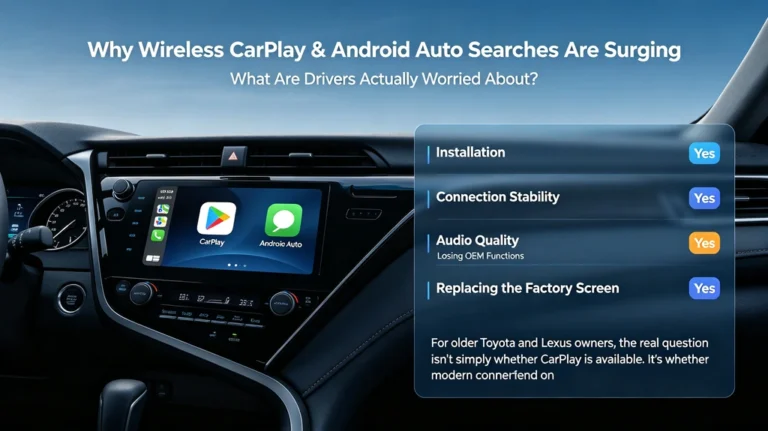
CarPlay Is Now a Car-Buying Dealbreaker — What Should Older Toyota & Lexus Owners Do?
There was a time when Apple CarPlay and Android Auto were considered a nice bonus — something you’d notice on a test drive, maybe factor into your decision at the margins. That time has quietly ended. Smartphone integration has become one of the single biggest purchase drivers in the entire auto industry, and the data behind that shift is now hard to ignore.
If you already own an older Toyota or Lexus, this trend raises an obvious question: does your car suddenly feel outdated — and if so, what’s the actual fix?
The Numbers Behind the Shift
Recent industry data paints a striking picture of just how central this feature has become:
- About 94% of new vehicles sold in the US now ship with CarPlay support, spanning more than 800 models across over 50 brands.
- Close to 80% of US new-car shoppers say they wouldn’t consider a vehicle without CarPlay support — a number pulled directly from Apple’s own buyer research. This is no longer a “nice to have” feature; it’s a purchase-deciding one.
- Roughly a third of car buyers worldwide call smartphone projection a hard requirement, including 30% of EV buyers and 35% of combustion-vehicle buyers.
- 83% of Americans who have access to CarPlay or Android Auto actively use it every time they drive. This isn’t shelfware sitting unused in the dashboard — it’s a daily habit drivers have built their whole in-car routine around.
Put together, these numbers describe a fundamental shift: smartphone integration isn’t a feature buyers evaluate anymore. It’s a feature they assume, the same way they assume power windows or air conditioning.
What This Means If You’re Not Buying a New Car
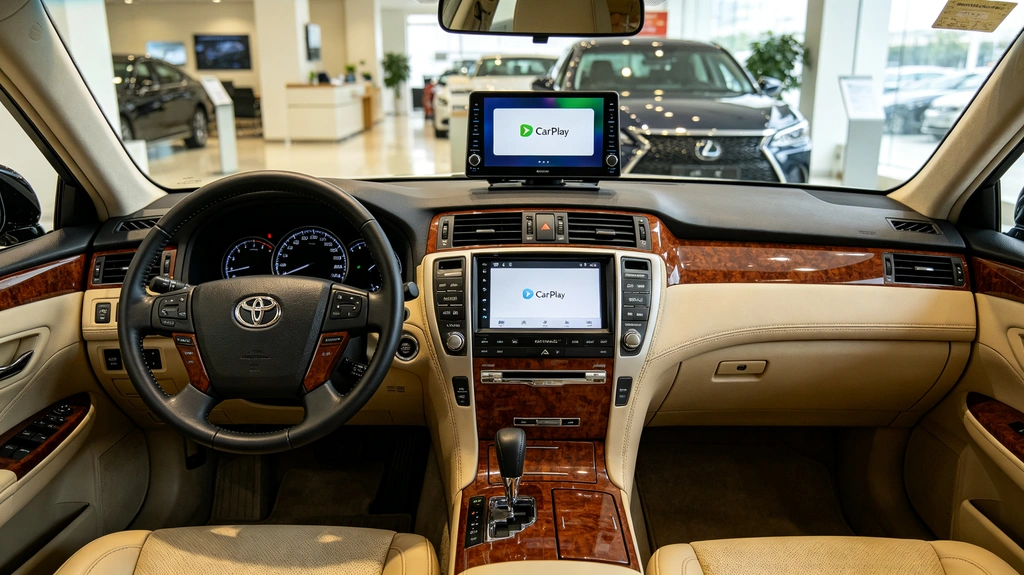
Here’s the twist: most of the vehicles built before this shift are still excellent cars. A well-maintained Toyota Crown, Mark II, or Lexus GS/LX wasn’t built to be “outdated” — it was built to run reliably for decades. The engine, transmission, and chassis on these vehicles routinely outlast the dashboards they came with.
The mismatch isn’t mechanical. It’s that the infotainment software inside these vehicles was designed years before wireless smartphone integration became the industry default. Your car isn’t behind because it’s old — it’s behind because the dashboard was built for a different era of phones.
That leaves owners of these vehicles in an odd spot: the same market data pushing new-car buyers toward CarPlay-equipped vehicles doesn’t offer any clear guidance for people who already own a great car that simply doesn’t have it.
The Two Traditional (Bad) Options
Historically, owners in this position faced two unsatisfying choices:
- Trade in a perfectly good car to get factory CarPlay support — an expensive, often unnecessary way to solve what is really a software gap, not a mechanical one.
- Replace the entire head unit and screen, which typically means losing the factory dashboard look, risking steering wheel button functionality, and potentially disrupting camera systems or premium audio integration like Mark Levinson setups — often for a bill running into the thousands.
Neither option actually respects what owners like about their car in the first place: reliability, familiarity, and a dashboard that was designed to match the vehicle’s interior.
The Third Option: Retrofit, Don’t Replace
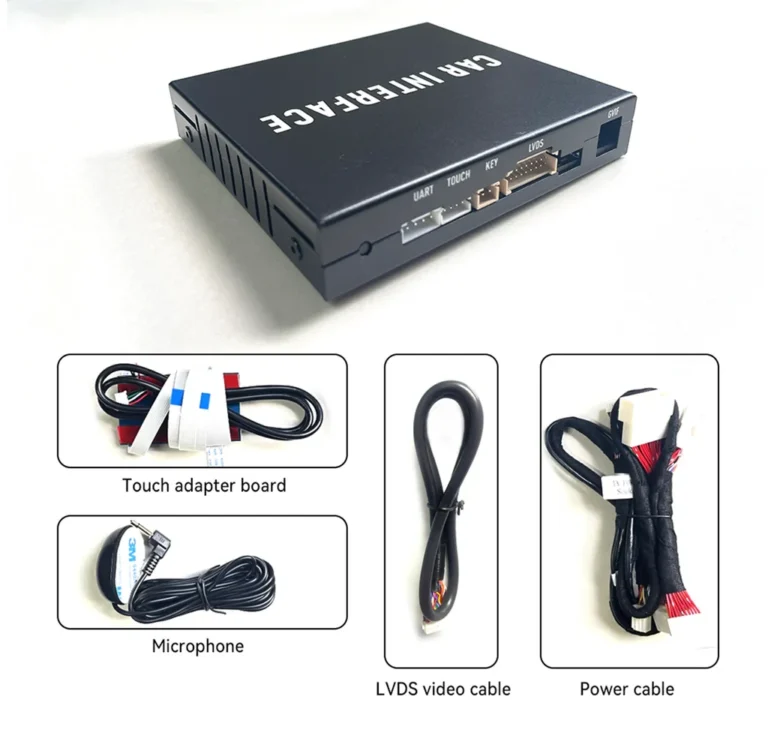
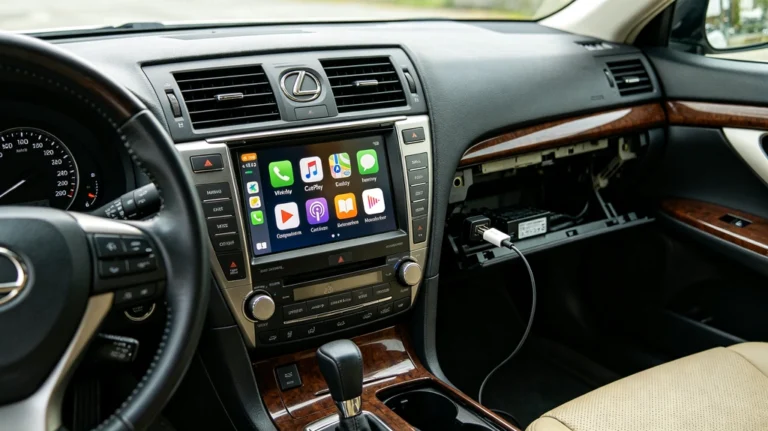
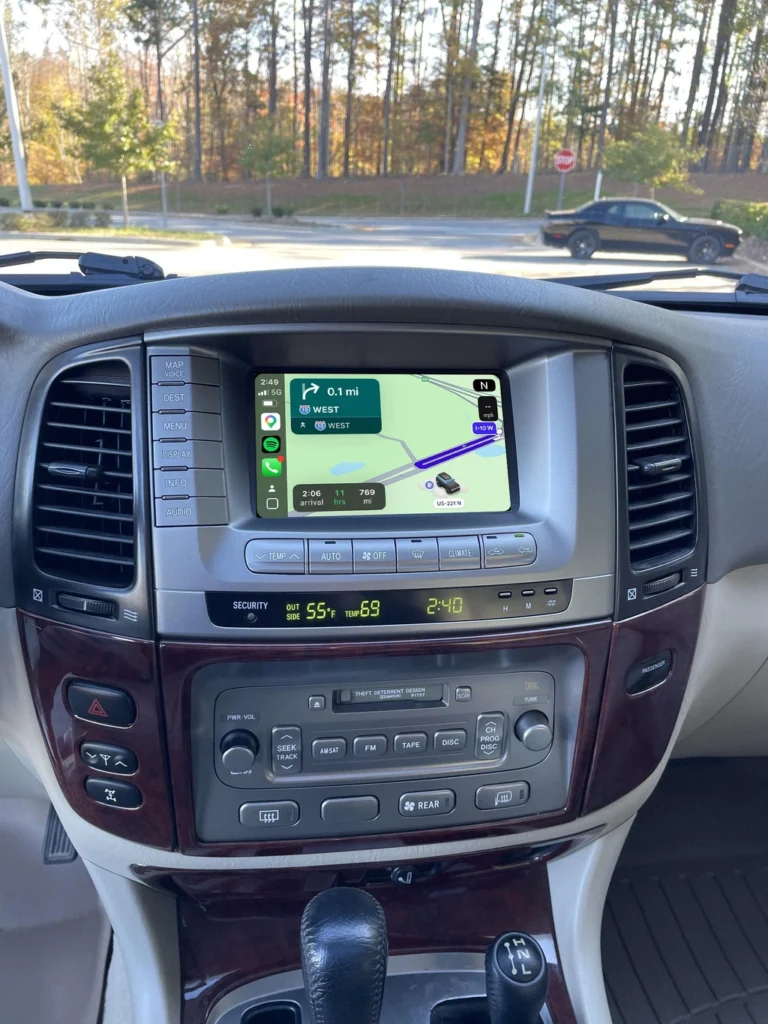
This is where OEM-style integration modules come in — and increasingly, industry commentary is treating them as the standard path forward rather than a workaround. Instead of tearing out the factory screen, a properly engineered interface module connects behind it, adding wireless CarPlay and Android Auto without touching what already works.
For Toyota and Lexus owners specifically, this means:
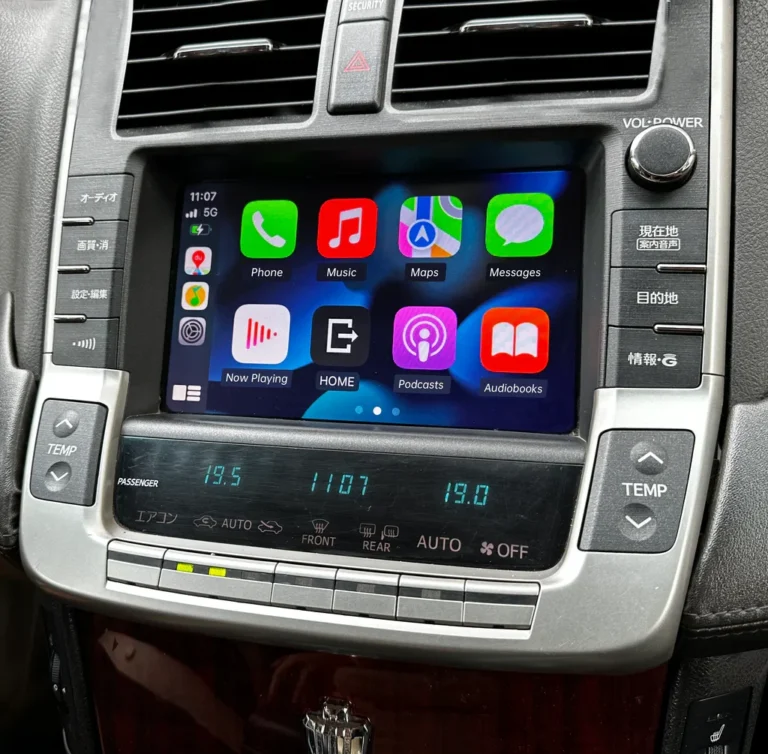
- Your original screen, steering wheel buttons, and climate controls stay exactly as they are — no cutting, no rewiring, no compromise.
- Your phone connects automatically the moment you start the car, over Wi-Fi and Bluetooth — no cable required.
- Navigation, calls, and messaging become hands-free, triggered right from the existing steering wheel talk button.
- Premium audio systems, including Mark Levinson setups, integrate cleanly, with no compressed or hissy streaming audio.
- Installation takes about 1–2 hours, whether done at home or at a local shop.
Models like the Toyota Crown (GRS180 series through S200/S220 generations), the Mark II/JZX110 Verossa VR25, the Lexus GS300/GS430, and older Lexus LX vehicles are exactly the kind of cars this approach was built for: mechanically sound, dashboard-designed-with-care vehicles that were simply built a few years too early for wireless smartphone integration to be standard.
Why Catching Up Now Makes Sense
A few forces make this a good moment to close the gap rather than wait:
- The habit is already universal. With 83% of drivers actively using CarPlay or Android Auto daily, this isn’t an experimental feature you’re testing out — it’s infrastructure your daily driving routine will likely lean on immediately.
- The cost gap between retrofitting and replacing is significant. A full head unit swap can run into the thousands and risks losing factory features; a plug-and-play module delivers the same day-to-day capability while preserving everything else.
- Your car’s mechanical lifespan hasn’t changed. If the engine and transmission still have years left, there’s no reason the dashboard should be the deciding factor in whether you keep driving it.
Bottom Line
The market has spoken clearly: smartphone integration is no longer optional for new-car buyers. But that doesn’t mean owners of older, well-built Toyota and Lexus models need to start car shopping. The dashboard gap that shows up in buyer surveys is exactly the gap that a properly engineered wireless retrofit module is designed to close — without asking you to give up the car you already know and trust.
Curious whether your specific model qualifies? Browse the AUVETO Wireless CarPlay & Android Auto Retrofit Collection to check compatibility, or reach out via WhatsApp to confirm fitment before you order.