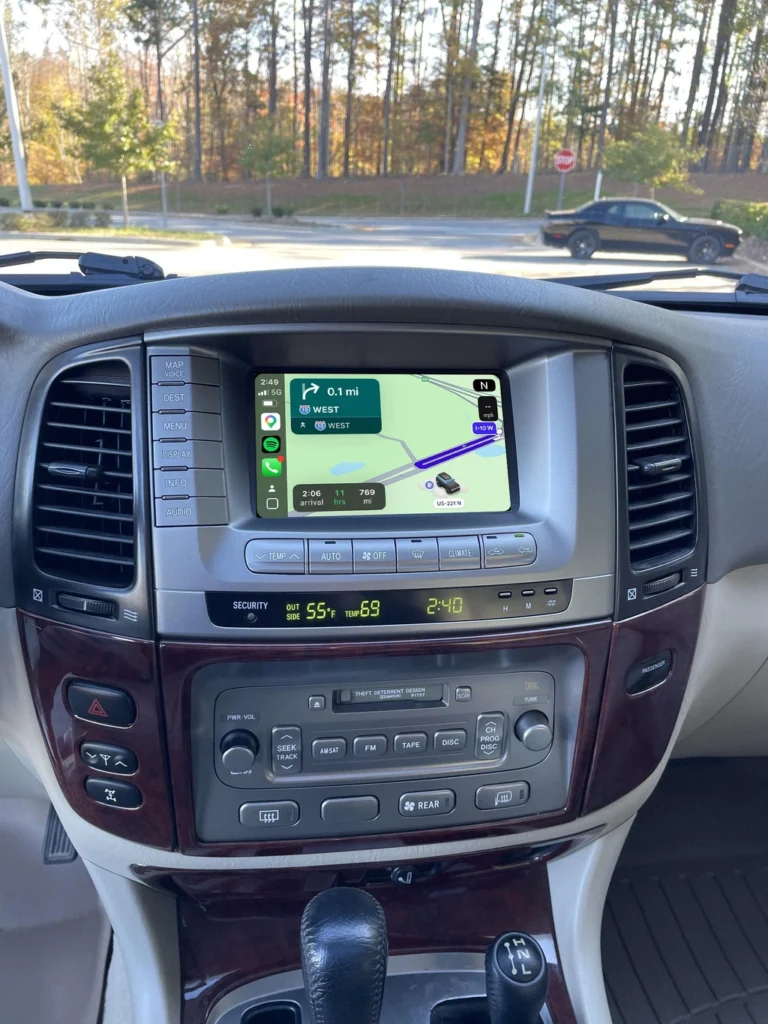
Comparing OEM Screen Replacements vs. Wireless CarPlay Upgrades
When you search for a CarPlay solution for an older Toyota or Lexus, two very different categories of product show up side by side: kits that replace your entire factory screen with a new touchscreen unit, and kits that add CarPlay behind your existing factory screen without touching it. They solve the same underlying problem, but the trade-offs between them are significant enough to be worth understanding before you spend anything.
🖥️ What Each Option Actually Is
OEM screen replacement means removing your factory display and head unit entirely and installing a new touchscreen unit (often a larger, more modern-looking Android-based screen) in its place, generally paired with a dash trim adapter to fit the new screen into your original opening.
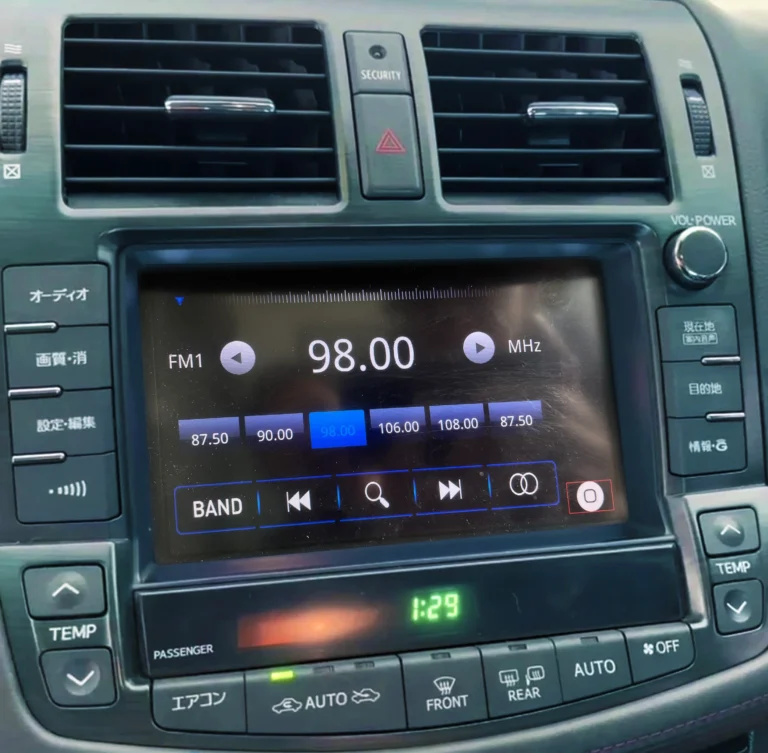
Wireless CarPlay integration means keeping your factory screen and head unit completely intact, and connecting a hidden module behind the dash that adds CarPlay and Android Auto functionality to your existing display.
The core difference is simple: one changes what’s on your dashboard, the other changes what your existing dashboard can do.
👀 Appearance & Dashboard Feel
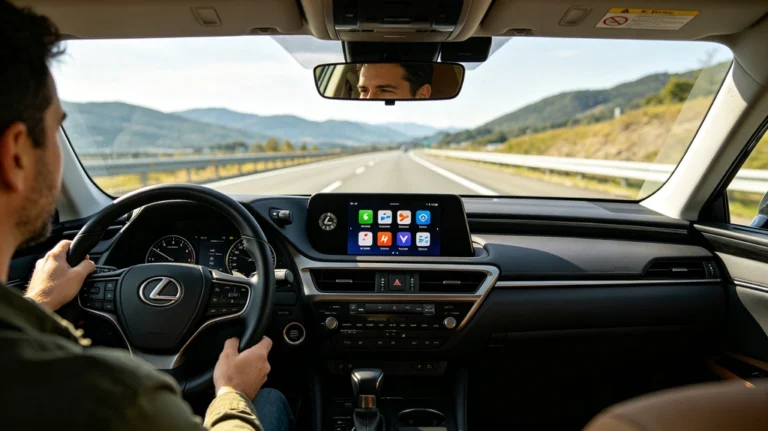
Screen replacement: Delivers a genuinely modern look — often a larger screen with a full Android-based interface, custom UI, and more visual customization than a factory system ever offered. The trade-off is that your dashboard no longer looks or feels like a factory Toyota or Lexus interior; it looks like exactly what it is, an aftermarket screen.
Wireless integration: Your dashboard looks 100% unchanged. From the driver’s seat, nothing about the interior signals that anything was modified at all — the factory bezel, screen size, and control layout are exactly as they left the factory.
Winner: Depends entirely on what you want. Screen replacement wins if you want a visibly modern, larger display. Integration wins if dashboard originality matters to you.
🎛️ Retention of Factory Controls
Screen replacement: This is where screen swaps run into the most friction. Physical climate controls, steering wheel button mapping, and factory camera systems often need to be re-adapted or partially rebuilt to work with the new unit — and depending on the kit and vehicle, some functions may not carry over cleanly, or may require additional adapters to restore.
Wireless integration: Because the factory head unit and its wiring stay in place, steering wheel controls, physical climate switches, and camera systems typically continue working exactly as they did before — the module adds functionality rather than replacing the system those controls were built for.
Winner: Wireless integration, clearly. This is the single biggest practical risk with screen replacement kits.
🔧 Installation Complexity
Screen replacement: A more involved job — removing the entire factory head unit, installing new mounting hardware, connecting an adapter harness to bridge factory functions to the new screen, and configuring the new system. This typically takes longer and carries more risk of something not integrating cleanly.
Wireless integration: A more contained job — trim panels come off, the module plugs into the factory harness behind the head unit, and the panels go back on. Nothing about your factory head unit itself is touched or removed.
Winner: Wireless integration, on both time and installation risk.
💰 Cost
Screen replacement: Generally the more expensive option, since you’re paying for an entirely new touchscreen unit, an adapter harness, and often a more involved installation.
Wireless integration: Typically less expensive, since you’re adding a module rather than replacing hardware — though pricing varies by vehicle and kit quality.
Winner: Wireless integration, generally.
🚗 Resale Value Considerations
Screen replacement: A visibly modified interior can be a plus or a minus depending on the buyer — some appreciate the modern upgrade, but buyers specifically seeking an original, unmodified interior (common with collectible JDM models like older Crowns) may see it as a mark against the car.
Wireless integration: Since the dashboard is visually untouched, this consideration mostly disappears — the car presents as stock to any future buyer, with the upgrade being effectively invisible unless you point it out.
Winner: Wireless integration, particularly for collector-oriented or JDM-import vehicles where originality carries real value.
✅ Quick Comparison
| OEM Screen Replacement | Wireless CarPlay Integration | |
|---|---|---|
| Dashboard appearance | Visibly modern/aftermarket | Completely unchanged |
| Factory control retention | Risk of partial loss, needs adapters | Fully retained by design |
| Installation complexity | Higher — full head unit swap | Lower — module install behind dash |
| Typical cost | Higher | Lower |
| Resale/originality impact | Can go either way | Minimal — car presents as stock |
| Best for | Wanting a bigger, modern screen | Wanting factory look + modern features |
Which One Actually Fits What You Want?
If your main goal is a bigger, more modern-looking screen and you’re not concerned about keeping the factory interior look, a screen replacement can deliver that — just go in aware of the added installation complexity and the real risk of losing some factory functionality along the way.
If your goal is simply “I want CarPlay and Android Auto on my existing screen without my car looking different,” a wireless integration module is built specifically for that outcome, with meaningfully lower installation risk and cost.
Where AUVETO Fits
AUVETO’s Smart Integration Kits are built entirely around the second approach — no screen swap, no aftermarket bezel, no re-adapting your climate controls or camera system to a new unit. Your factory Toyota or Lexus screen stays exactly as it is, and CarPlay/Android Auto simply becomes available on it.
Want to know if your specific model and screen are a fit? Send a photo of your center console to auveto@gmail.com or message us on WhatsApp, and we’ll confirm before you spend anything.