The 2026 CarPlay & Android Auto Industry Data Report: Market Size, Adoption Rates, and What It Means for Your Car
Smartphone integration has moved from a car-buying afterthought to one of the auto industry’s fastest-growing categories. But most articles on the topic cite one or two numbers in isolation, without showing the full picture. This report pulls together the key data points — market size, growth rate, adoption curves, and platform breakdowns — into a single reference, and explains what each number actually means if you own an older Toyota or Lexus that predates this technology.
Market Size: How Big Is This Category, Really?
Depending on how it’s measured, market research firms currently put the global automotive infotainment market at roughly $30.9 billion in 2025, projected to nearly double to $60.9 billion by 2035 — a compound annual growth rate (CAGR) of around 7.1–7.5%. Other estimates covering the broader “automotive infotainment” category specifically project growth of $3.76 billion by 2029 at a 7.5% CAGR from a smaller current base, reflecting differences in exactly which product segments are counted.
Zooming in specifically on Apple CarPlay, the sub-segment is valued at roughly $2.8 billion in 2025, and is projected to grow to $7.6 billion by 2034 — an 11.7% CAGR, nearly double the pace of the broader infotainment market. That gap matters: it means smartphone-integration technology specifically is growing meaningfully faster than automotive infotainment as a whole, which includes plenty of hardware and software that has nothing to do with phone mirroring at all.
Geographically, North America holds the largest share of the CarPlay market at 38.5% of global revenue in 2025, while the Asia-Pacific region is projected to post the fastest growth, at an 8.7% CAGR through 2035, driven by rapid EV adoption and expanding smartphone penetration in markets like Vietnam, Thailand, and Indonesia.
Adoption: How Fast Are Drivers Actually Switching?
Market size only tells part of the story — the more revealing number is how quickly ordinary drivers are adopting this technology in their own vehicles:
- Roughly 40% of Americans who have driven in the past month now have CarPlay or Android Auto in their primary vehicle — up from 32% in 2024 and just 26% in 2023. That’s not gradual growth; it’s a curve that’s visibly steepening year over year.
- About 94% of new vehicles sold in the US in 2026 ship with CarPlay support, spanning more than 800 models across over 50 brands.
- 83% of Americans with access to CarPlay or Android Auto actively use it every time they drive — this is a daily habit, not a feature people forget exists.
- Wireless connectivity now accounts for 66% of the automotive infotainment market, and that segment alone is projected to keep growing at a 7.5% CAGR through 2035 — confirming that wireless, not wired, is where the category is heading structurally, not just anecdotally.
Platform Breakdown: Apple vs. Google
The competitive landscape between the two major platforms is lopsided, and getting more so:
- Apple CarPlay held roughly 38.5% global market share in 2025, valued at approximately $8.66 billion, while Android Auto held about 31.2% share, valued at roughly $7.02 billion.
- In terms of active users specifically in the US connected-car market, Apple CarPlay leads with 46.0 million users this year, compared to 32.1 million for Android Auto — and that gap is forecast to widen through 2028, with CarPlay reaching nearly 30% share of the connected-car market versus roughly 20.3% for Android Auto.
- By 2028, over 70% of licensed US drivers are projected to be driving a connected car, representing roughly 180.9 million drivers — a scale that puts smartphone integration firmly in “mainstream infrastructure” territory rather than early-adopter tech.
The Purchase-Decision Angle
Perhaps the most consequential statistic for anyone car shopping today: close to 80% of US new-car buyers say they wouldn’t consider a vehicle without CarPlay support, according to Apple’s own buyer research. Globally, roughly a third of car buyers call smartphone projection a hard requirement — including 30% of EV buyers and 35% of combustion-vehicle buyers. We covered what this shift means in detail in our breakdown of why CarPlay has become a car-buying dealbreaker — but the short version is that this feature has moved from optional to assumed, the same way power windows or air conditioning did decades earlier.
The Retrofit Market: A Category of Its Own
Here’s a number that rarely gets attention in mainstream coverage but matters enormously if you’re driving an older vehicle: the global wireless CarPlay adapter market alone reached $1.8 billion in 2025 — a category that exists specifically because more than 800 factory-CarPlay-compatible models on the road today were built before wireless CarPlay became standard, creating sustained demand for retrofitting wireless connectivity into cars that already had wired support.
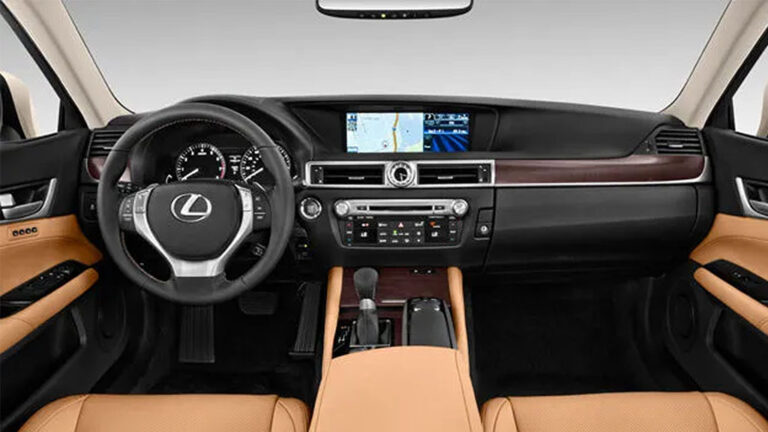
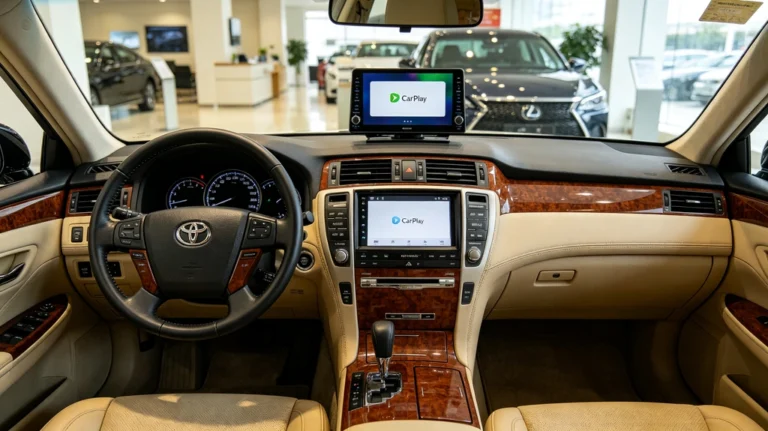
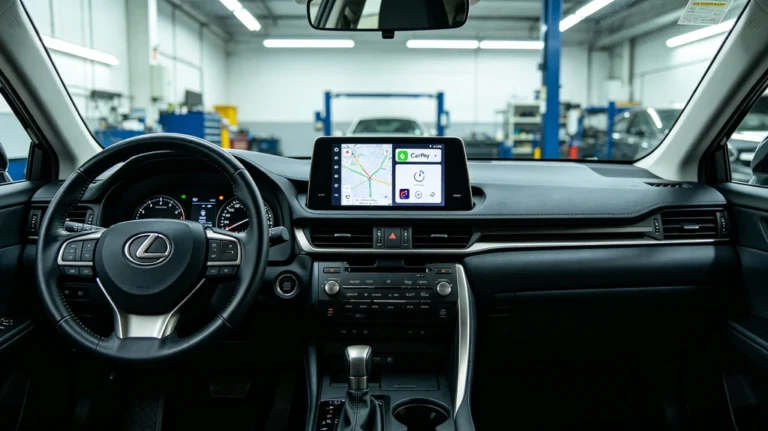
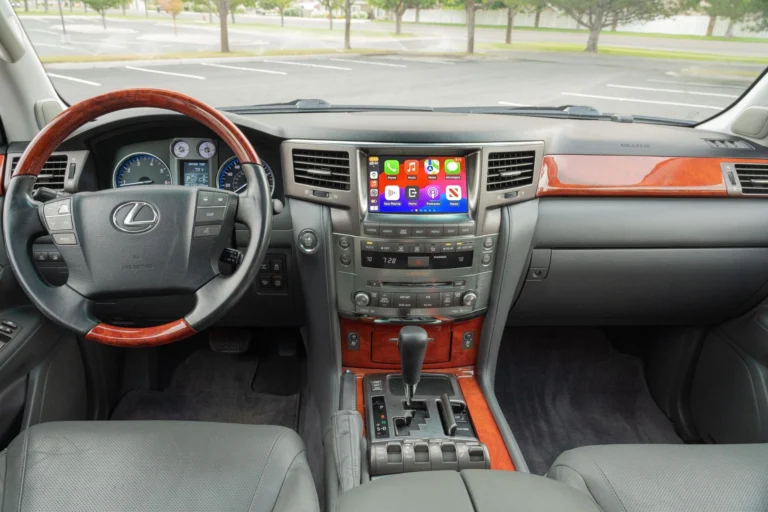
That number describes drivers upgrading cars that already had CarPlay in some form. It doesn’t even capture the separate, larger population of vehicles — like the Toyota Crown, Mark II/JZX110 Verossa VR25, Lexus GS300/GS430, and older Lexus LX generations — that never had CarPlay support of any kind from the factory, because they were built before the protocol existed. We’ve written in detail about the real difference between dongle adapters and hidden integration modules for exactly this reason: the retrofit market isn’t one uniform category, and knowing which problem you’re actually solving matters before you buy anything.
Where the Technology Is Headed Next
The next generation of CarPlay is expanding in scope, not narrowing. Apple’s upcoming CarPlay Ultra extends beyond the center display to cover the full instrument cluster — speedometer, fuel gauge, and climate controls — moving the platform from a screen-mirroring tool toward something closer to a complete in-vehicle operating environment. It currently ships in select Aston Martin vehicles, with Hyundai, Kia, and Genesis expected to adopt it later in 2026.
At the same time, not every automaker is moving in the same direction. General Motors has confirmed it will remove CarPlay and Android Auto from its entire lineup by 2028 in favor of an in-house platform — a decision with implications we explored in why GM’s CarPlay shutdown actually favors owners of older, retrofitted vehicles. It’s a useful reminder that access to this technology in new vehicles isn’t guaranteed to be permanent, while a hardware-based retrofit, once installed, isn’t subject to any manufacturer’s future roadmap decisions.
What All of This Means If You Drive an Older Toyota or Lexus
Put together, the data tells a consistent story: smartphone integration is a large, fast-growing, increasingly standard part of the driving experience — and one that’s advancing in capability, not leveling off. For owners of newer vehicles, that shift is already built in. For owners of older, mechanically excellent vehicles built before this technology existed, the gap between what the market now expects and what the factory dashboard delivers doesn’t close on its own.
That’s precisely the gap a properly engineered, model-specific integration module is designed to close — bringing wireless CarPlay and Android Auto to vehicles the industry’s own growth statistics were never counting in the first place, without asking owners to give up the factory screen, steering wheel controls, or premium audio systems, like Mark Levinson setups, that came with the car.
Curious whether your specific model is part of that gap? Browse the AUVETO Wireless CarPlay & Android Auto Retrofit Collection to check compatibility, or reach out via WhatsApp to confirm fitment before you order.