Dongle Adapters vs. Hidden Integration Modules: Which One Should Older Car Owners Choose?
Search “wireless CarPlay” on Amazon or eBay, and you’ll find two completely different categories of product. One is a small $20–60 USB dongle that plugs into your car’s existing port and claims to turn your car wireless instantly. The other is a higher-cost, professionally installed module hidden inside the dashboard. They sound similar, but they solve entirely different problems — and confusing the two is the single most common mistake older car owners make when shopping for a retrofit.
This guide breaks down exactly what each product does, so you can figure out which one actually fits your car.
The Question That Decides Everything: Does Your Car Already Support Wired CarPlay?
This is the fork in the road — and where most people go wrong before they even place an order.
A dongle adapter’s entire job is converting wired CarPlay into wireless CarPlay. It is not adding CarPlay to a car that doesn’t have it — it’s simply replacing the USB cable with a wireless connection. That only works if your car’s factory head unit already supports wired CarPlay or Android Auto. If your car was never built with CarPlay support in the first place — which is true of most pre-2015 Toyota Crown, Mark II, and Lexus GS/LX models — plugging in a dongle will do nothing at all, because there’s no underlying software in the head unit capable of recognizing the CarPlay protocol to begin with.
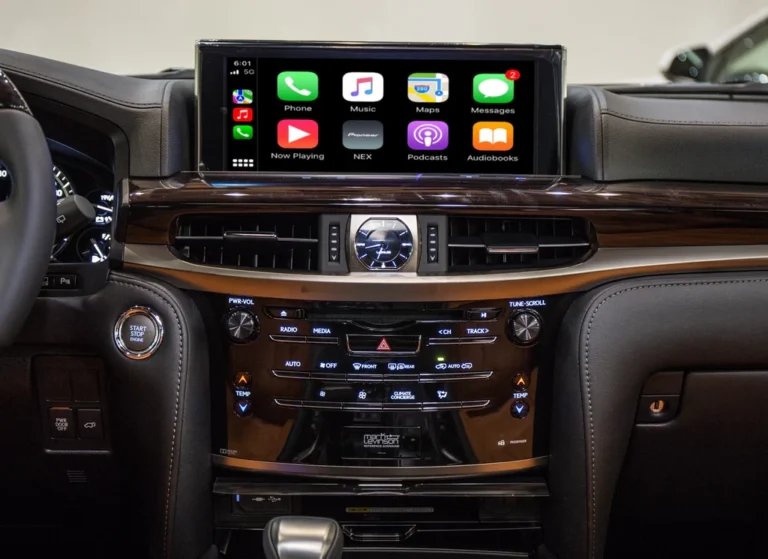
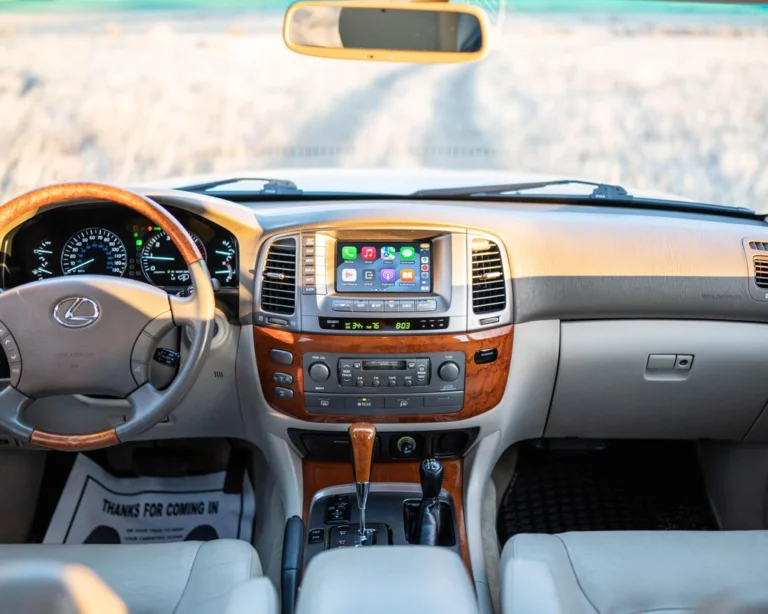
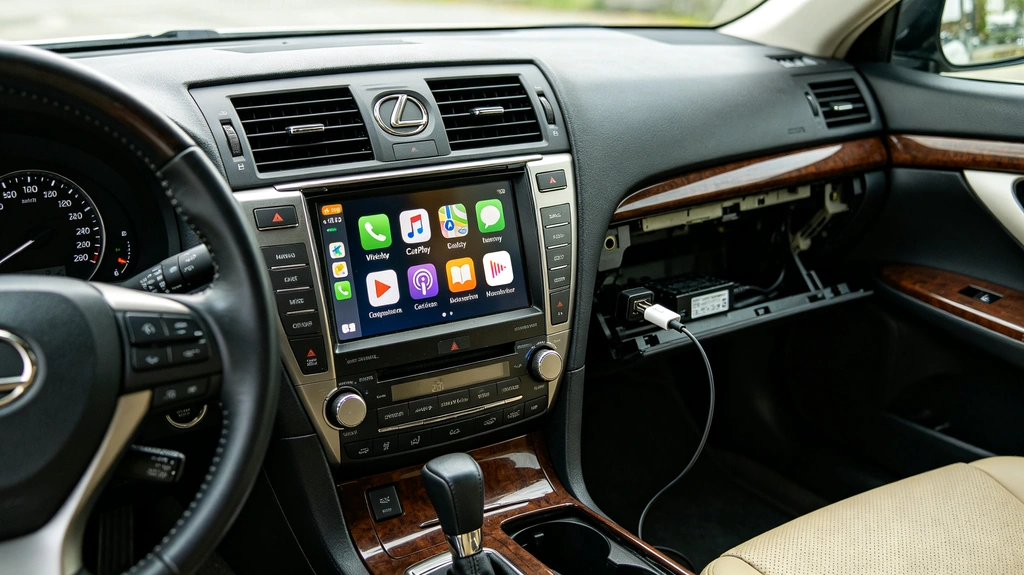
A hidden integration module works completely differently. It’s a hardware bridge installed inside the dashboard that connects directly to your car’s original wiring, adding genuine CarPlay and Android Auto functionality to vehicles that never had it from the factory — not converting an existing connection, but building the capability from the ground up.
The short version: if your car already has wired CarPlay and you just want to lose the cable, a dongle will do the job. If your car has no CarPlay support at all, a dongle won’t help — you need an integration module.
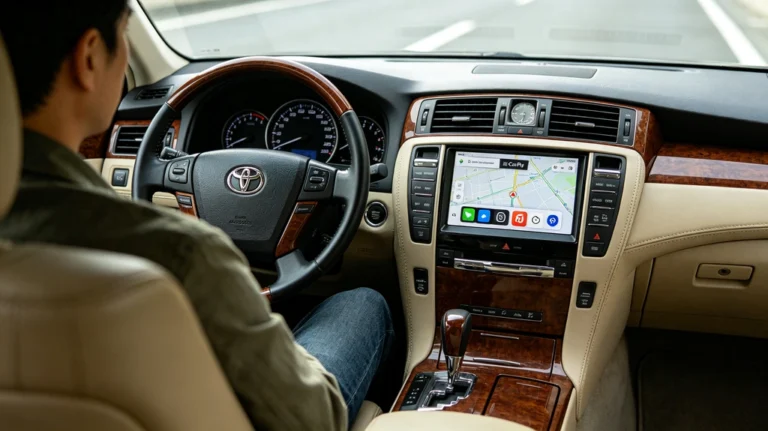
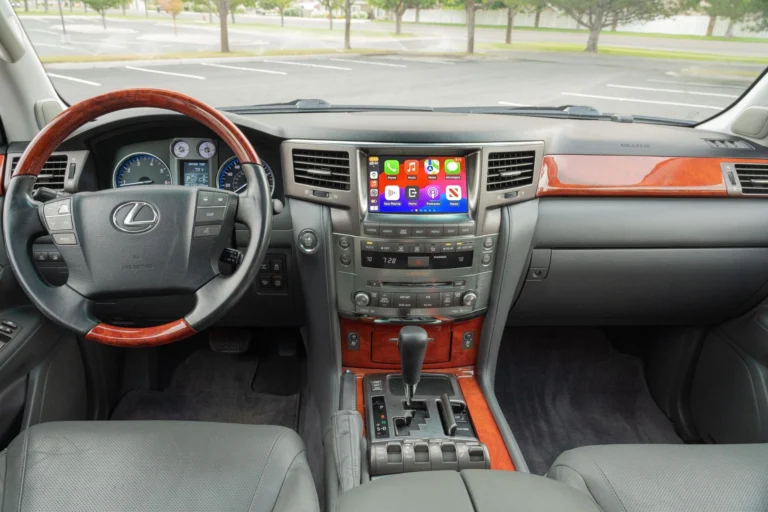
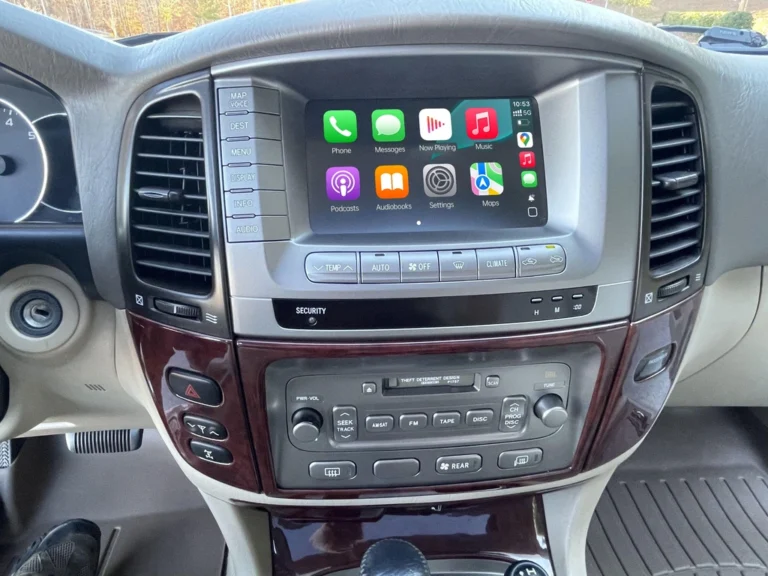
For most Toyota Crown, Mark II/JZX110 Verossa VR25, Lexus GS300/GS430, and older Lexus LX owners, the answer is almost always the latter, simply because these vehicles predate the CarPlay protocol itself.
Side-by-Side Comparison
| Comparison | Dongle Adapter | Hidden Integration Module |
|---|---|---|
| Requirement | Car must already support wired CarPlay | Works even if the car never had CarPlay support |
| Installation | Plugs into USB port, done in minutes | Dashboard disassembly, connects to factory wiring, 1–2 hours |
| Appearance | Visible near the USB port or screen, disrupts factory look | Fully hidden inside the dashboard — no visible sign of modification |
| Steering wheel controls | Usually retained (only if the car already supports them) | Full factory steering wheel functionality preserved |
| Audio system compatibility | Depends on the car’s existing audio pathway | Integrates directly with factory audio, including premium systems like Mark Levinson |
| Long-term stability | Relies on the car’s older hardware to process the newer protocol — more prone to lag or disconnects on long drives | Built-in dedicated high-speed Wi-Fi and Bluetooth hardware, designed for stable long-duration connections |
| Price range | Typically $20–60 | Typically several hundred dollars, depending on the vehicle |
| Best for | Owners of newer cars that already have wired CarPlay and just want the cable gone | Owners of older vehicles with no factory CarPlay support at all |
Why the “Cheap Dongle” Is a Trap for Older Car Owners
Many older car owners see a $20–60 dongle and think, “why not just try it first?” The problem is that these listings are often written vaguely enough to suggest a dongle will “just work” — when in reality:
- If your car has no wired CarPlay interface or supporting software, a dongle cannot physically establish a connection. It’s not a question of performance — it simply won’t function at all.
- Even on vehicles that do have wired CarPlay, going wireless through a dongle still depends on the car’s original, aging head-unit hardware to process the more demanding wireless protocol. On long drives, that often means more disconnects, lag, or audio-video sync issues — because the dongle only changes the signal format, it doesn’t upgrade the underlying processing power actually doing the work.
For owners of classic models like the Toyota Crown or Mark II, spending money on a product that likely won’t install at all — or won’t stay stable if it does — usually ends up costing more time and frustration than choosing the right solution from the start.
What Integration Modules Solve That Dongles Simply Can’t
Hidden integration modules have become something close to the industry standard for retrofitting precisely because they solve a missing-feature problem, not a connection-type problem:
- Add CarPlay and Android Auto functionality from scratch, rather than converting the format of an existing connection
- Preserve the factory screen, steering wheel buttons, climate controls, and camera systems — the modification is completely invisible
- Independent Bluetooth and high-speed Wi-Fi hardware, so the car’s old head unit isn’t stuck processing a modern wireless protocol it was never designed for
- Engineered per model, rather than a generic box hoping to fit whatever port it’s plugged into
This is also why owners of the Toyota Crown Athlete S210 and older Lexus models specifically call out things like “perfect fitment,” “instant steering wheel response,” and “no disconnections over a 6-hour road trip” in their reviews. That kind of result comes from a module engineered around a specific vehicle’s wiring and screen resolution — not a generic box designed to squeeze into whatever port it happens to find.
How to Decide: Three Quick Questions
- Does my car already support wired CarPlay from the factory? Yes → A dongle adapter is worth considering No → A dongle won’t help — go straight to an integration module
- Do I care about keeping the dashboard’s original, factory appearance? Not really, a small box near the USB port doesn’t bother me → Dongle Yes, I want the upgrade to be completely invisible → Integration module
- Do I drive long distances often, or want a setup that just works long-term without fuss? Mostly short commutes, occasional hiccups are fine → Dongle Frequent road trips, and I want to install it once and forget about it → Integration module
For owners of the Toyota Crown, Mark II, and Lexus GS/LX generations, the answer is usually clear already: these vehicles were built before the CarPlay protocol existed, so a dongle simply cannot solve the problem at a physical level. The only real path to a genuinely wireless CarPlay experience is a hidden integration module engineered specifically for that vehicle.
Bottom Line
Dongle adapters and integration modules aren’t competing products — they solve different problems. If your car already has wired CarPlay and you just want to ditch the cable, a dongle is a perfectly reasonable, low-cost option. But if your car never had CarPlay support to begin with — especially if you drive a Toyota Crown, Mark II/JZX110 Verossa VR25, Lexus GS300/GS430, or an older Lexus LX — the real investment worth making is a hidden integration module engineered specifically for your vehicle.
Not sure which category your car falls into? Browse the AUVETO Wireless CarPlay & Android Auto Retrofit Collection to check compatibility, or reach out via WhatsApp to confirm fitment before you order.