Retrofit module or Android screen replacement: which should you choose?
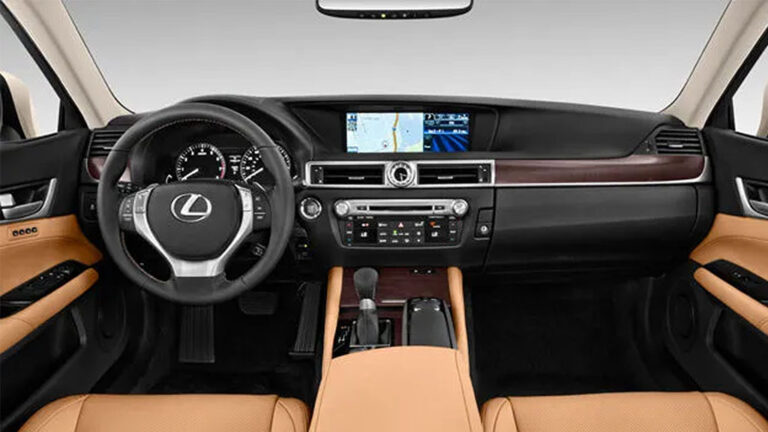
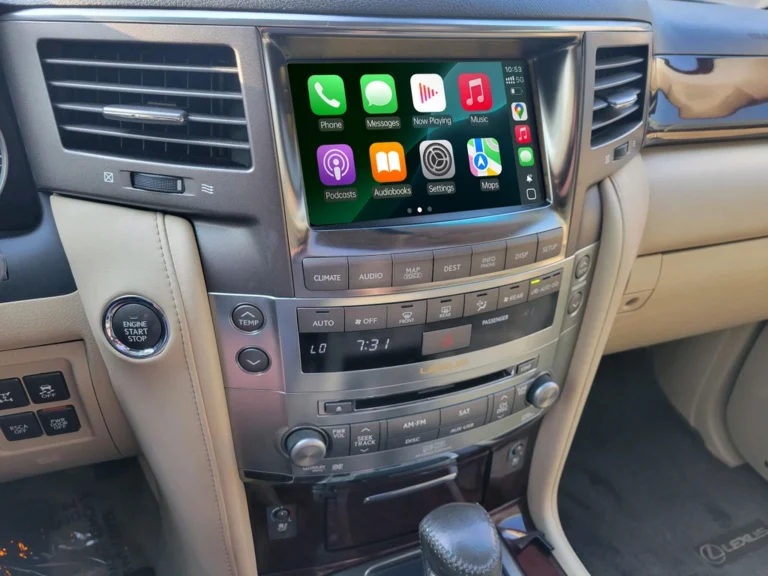
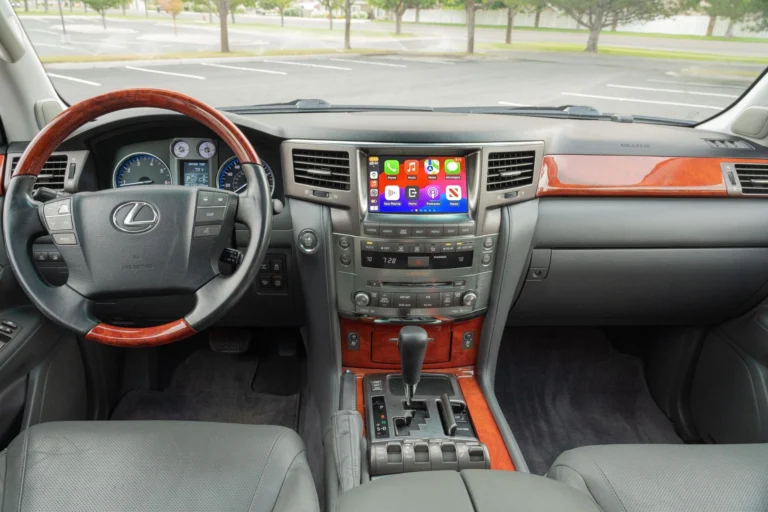
Both add CarPlay and Android Auto to an older Toyota or Lexus, but they change different things. A retrofit module keeps your factory screen, dashboard look and steering wheel controls, and typically costs less. A full Android screen replacement gives you a larger, higher-resolution display and a built-in Android system, in exchange for a changed dashboard and a bigger installation job. The right choice depends on whether keeping the original look matters more to you than getting a bigger screen.
Key takeaways
- A retrofit module works with your existing screen. An Android screen replacement swaps it out entirely.
- Modules generally cost less and install faster. Screen replacements cost more and take longer, and are often better handled by a professional installer.
- A module keeps factory features such as steering wheel controls and camera integration intact on supported vehicles. A screen replacement needs those features rebuilt through adapters.
- If you want a larger display or a standalone Android system that works without a phone, a screen replacement is the only route that offers it.
What each option actually is
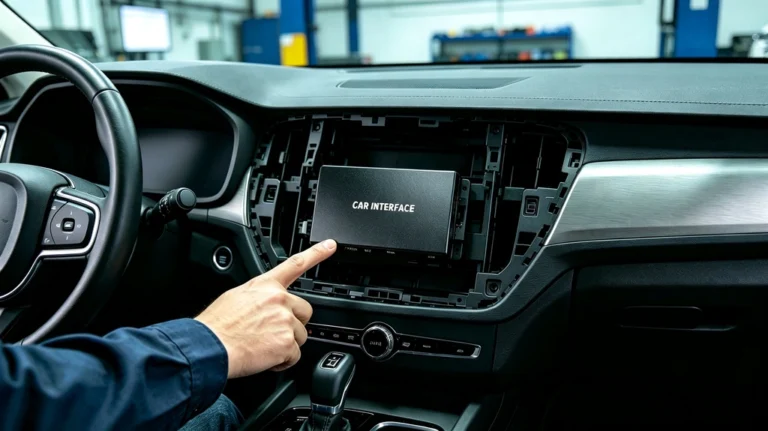
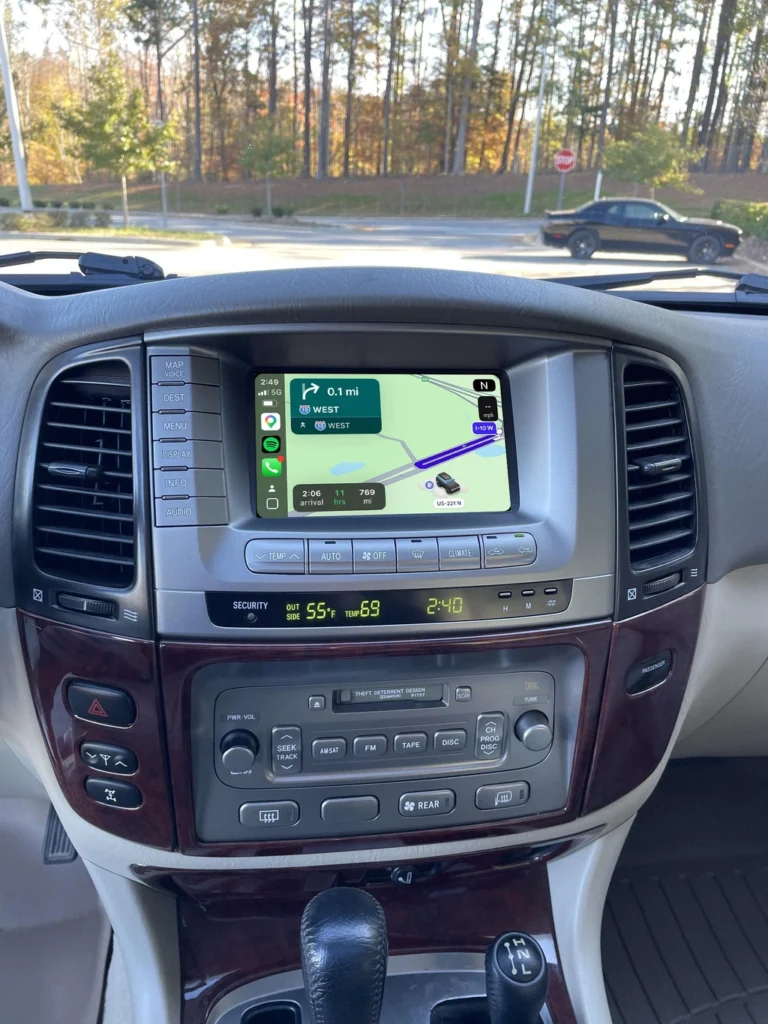
A retrofit module is an aftermarket unit installed between the factory head unit and the original display. It adds wired or wireless CarPlay and Android Auto without replacing the screen, and depending on the vehicle you can operate it through the factory touchscreen, a center console knob, a touchpad or steering wheel buttons.
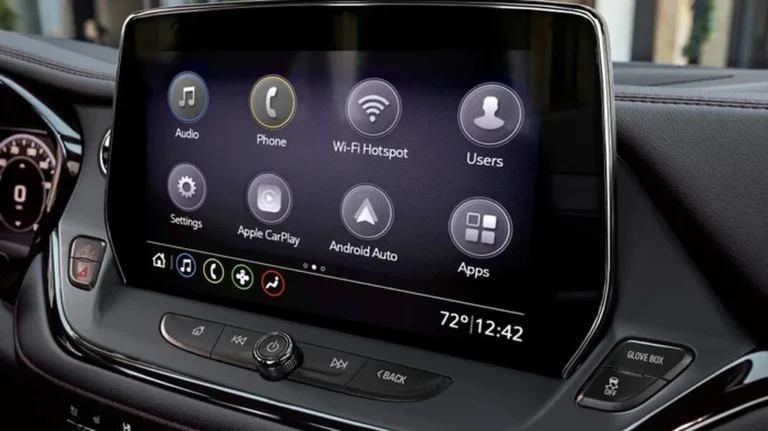
An Android screen replacement, often called a Tesla-style screen, replaces the factory display and infotainment system with a larger touchscreen running its own Android operating system. These units commonly range from about 10 to 14 inches and can run apps, navigation and media on their own, even with no phone connected.
Side by side
| Retrofit module | Android screen replacement | |
|---|---|---|
| Factory screen | Stays | Replaced |
| Dashboard look | Unchanged | Changes |
| Screen size and resolution | Limited to your factory display | Larger, often higher resolution |
| Steering wheel controls | Usually keep working on supported vehicles | Often need a separate adapter, such as a Metra Axxess ASWC-1 |
| Backup camera | Usually integrates on supported vehicles | Needs to be wired into the new unit |
| Standalone Android apps | Not available | Available, works without a phone connected |
| Typical price range | Around $250 to $600 | Around $600 to $1,800, depending on the model |
| Installation | Around 1 to 2 hours, DIY-friendly | More involved, professional installation is often recommended |
Prices and installation times vary by vehicle and by the specific product, so treat these as general ranges rather than a quote for your car.
Why owners choose a retrofit module
Keeping the original dashboard matters to many owners, especially on well-kept older vehicles where the factory look is part of the appeal. A module also tends to be the simpler path: it is usually DIY-friendly, costs less, and does not require rebuilding steering wheel controls, HVAC integration or camera wiring through extra adapters, since those already work through the factory system.
AUVETO builds modules of this type for Toyota and Lexus. The kits keep the original screen, dashboard look and steering wheel controls, install in around 1 to 2 hours, and come with manuals, step-by-step video guides and 1-on-1 remote tech support.
Why owners choose a screen replacement
A larger screen is the main draw. Some Android units run their own apps and navigation independently of a phone, and Google Assistant or a phone-based system can appear alongside them. For an owner who wants the interior to feel closer to a modern EV, or who wants a screen that does more when no phone is connected, this is the only route that delivers it.
The trade-off is complexity. Steering wheel control retention usually requires a separate adapter and a compatible unit, and HVAC controls, cameras and factory features have to be reconnected through the new unit rather than staying on the original system. Owners researching this route often want to keep some factory functions, such as adjustable settings accessed through the dealer diagnostic tool, and that can be harder to preserve after a full replacement.
A quick way to decide
Ask yourself these questions:
- Do I want my dashboard to look the way it did from the factory? If yes, lean toward a module.
- Is a bigger screen or a standalone Android system important to me? If yes, lean toward a screen replacement.
- Do I want the simpler, lower-cost installation? If yes, lean toward a module.
- Am I comfortable with a more involved install, possibly through a professional? If yes, a screen replacement is more realistic.
- Do factory features such as steering wheel controls and camera integration need to work exactly as before? If yes, check what a screen replacement requires to preserve them, since a module is usually the more direct path.
Not sure your vehicle is compatible?
Toyota and Lexus screens vary by model, market and software version. Browse the AUVETO collection for your vehicle, or contact the team for a fitment check before you order.
FAQ
Is a CarPlay module or an Android screen replacement better?
Neither is better for everyone. A module keeps your factory screen and controls at a lower cost. A screen replacement gives you a larger display and a standalone Android system at a higher cost and with a more involved install.
Will I lose my steering wheel controls with an Android screen replacement?
Often, yes, unless you add a separate steering wheel control adapter and confirm it works with the new unit. A retrofit module usually keeps the factory controls working on supported vehicles without extra hardware.
Does an Android screen replacement work without a phone?
Yes, many units run their own apps, navigation and media independently, since they have a built-in Android operating system. A retrofit module depends on your phone being connected.
How much does each option cost?
Retrofit modules commonly range from about $250 to $600. Android screen replacements commonly range from about $600 to $1,800, depending on the model and screen size. Exact pricing depends on your vehicle.
Can I install either one myself?
Retrofit modules are often DIY-friendly and install in around 1 to 2 hours. Android screen replacements are more involved, and professional installation is often recommended.
Does a retrofit module support my factory backup camera?
On supported vehicles, yes. Our guide on the factory backup camera covers what to check for your model.